Glamping is sold as affordable luxury, but try booking a night and you’ll quickly see the problem: the same word covers everything from a canvas tent with cots to a glass dome with a private hot tub. The glamping cost for a stay can range from around $100 to well over $800 per night, and without a clear picture of what drives those prices, it’s hard to know whether you’re getting a deal or paying double.
This guide breaks down what a night should actually cost by stay type. Basic tent glamping typically runs $100–$150 per night, safari tents and yurts sit in the $150–$250 range, and cabins, Airstreams and domes occupy the $200–$400 comfort tier. Treehouses and luxury lodges start above $400 and climb from there. We’ll also look at what shapes the price before you ever pick a stay, and how smart timing and booking can bring your total down.
What Shapes Glamping Cost Before You Even Pick a Stay
Before you fall in love with a photo of a yurt or a safari tent, understand this: the structure matters less than you think. Location and demand drive glamping prices more than anything else. The exact same yurt model can cost roughly double when it sits near a popular national park compared to the identical setup an hour away in farm country. Operators know travelers will pay for proximity to trailheads and iconic views, and their rates reflect it.
Season is the second big lever. At most sites, peak season — generally June through August — adds 20–50% over shoulder-season rates for the same unit. A tent that feels like a bargain in May can feel like a hotel splurge in July. If your dates are flexible, this single factor can swing your budget more than upgrading or downgrading your stay type.
The Fees That Sneak Up on You
Then there’s the fine print. Cleaning fees, firewood bundles, pet charges and extra-guest fees often add $50–$150 per booking, and they apply whether you stay one night or five. On a short trip, these extras can quietly add 30% or more to your per-night cost, so read the full price breakdown before you book, not after.
Finally, look at what’s actually inside the unit. Private bathrooms, heating and kitchenettes are the biggest single price drivers in glamping — far more than canvas versus wood walls. If you can happily use a shared bathhouse and cook on a camp stove, you can often drop down a whole price tier and barely notice the difference. If a real kitchen and a hot private shower are non-negotiable, budget for them from the start rather than being surprised by the rate.
Tent Glamping: The Budget Entry Point at $100–$150 a Night
Tent glamping is where most travelers start, and it’s easy to see why. These are pre-set canvas tents on wooden platforms, usually with a real bed, some basic furniture, and lanterns or string lights for atmosphere. You show up with a duffel bag instead of hauling gear, and someone else has already done the hard part. At $100–$150 per night, it’s the cheapest way to try glamping without committing to a big spend.
What you’re trading off at this price
The savings come with compromises, and it’s better to know them upfront. Bathrooms at this tier are typically shared — think a clean bathhouse a short walk away, not an en-suite. Climate control is usually absent too, so you’re relying on blankets in cool weather and cross-ventilation when it’s warm. Some sites throw in a fire pit, hammock, or communal kitchen, but don’t expect a kitchenette or private shower unless you move up a tier.
That said, for a one- or two-night trip in decent weather, these trade-offs are easy to live with. You’re paying for the experience of sleeping in canvas under real stars, not for hotel amenities.
Getting the best value
Shoulder season is where tent glamping shines. In mild climates, rates can drop 30–40% off peak pricing, which can bring a night under canvas down to a genuinely budget-friendly level. The weather is often still pleasant, the sites are quieter, and you get the same tent for significantly less. If you’re flexible on dates, aim for spring or fall in temperate regions and check the site’s shoulder-season calendar before booking — a few nights at these rates is the best introduction to glamping you can get.
Safari Tents and Yurts: Mid-Range Glamping at $150–$250 a Night
Step up from basic canvas tents and you reach safari tents and yurts, typically priced between $150 and $250 per night. At this level, you get real furniture, proper beds with mattresses (not just sleeping pads), and often an en-suite or semi-private bathroom. Many safari tents feel closer to a furnished studio than a campsite, with wooden decks, lounge areas and sometimes a small kitchenette setup.
Comfort has limits, though. Heating or fans are common at this tier, but full HVAC is rare, so a yurt in a cold region may only run seasonally. Before booking, check whether the site operates year-round or closes in winter, and ask what climate control the specific unit actually has — listings can be vague about this.
Where this tier shines is for families. Family-sized safari tents and yurts commonly sleep four to six people, which means the per-person cost can rival or beat a mid-range hotel room that fits the same group. A $200 tent split four ways works out to $50 each, often with more space than two hotel rooms would give you.
- Deck and outdoor furniture: Most safari tents in this range include a private deck or porch with seating, effectively adding a second living space you won’t get in a tent-tier stay.
- Semi-private bathrooms: If a unit doesn’t have an en-suite bath, it’s often a short walk to a dedicated bathroom shared with only one or two other units — a big step up from a communal campground block.
- Yurt insulation varies widely: A fabric-walled yurt heats and cools differently than a safari tent on a wooden platform, so read recent guest reviews for honest notes on summer heat or cold nights.
- Linen and housekeeping service: Unlike tent glamping, stays at this level often include made-up beds and towels as standard, saving you from packing bedding or paying linen fees.
Cabins, Airstreams and Domes: The $200–$400 Comfort Tier
Once you move past canvas, glamping starts to look a lot like a small vacation rental. Hard-sided stays — cabins, renovated Airstreams and geodesic domes — typically run $200–$400 per night, and for that you get things canvas simply can’t offer: a real kitchen or kitchenette, proper heating and insulation that keeps the inside comfortable when the temperature drops.
That insulation matters more than you might think. A cabin with heat and solid walls stays usable through fall and even winter in many regions, while most safari tents and yurts shut down or become uncomfortable once nights turn cold. If you want the glamping feel without the seasonal limitations, this is the tier to shop in.
Why domes cost more than they should
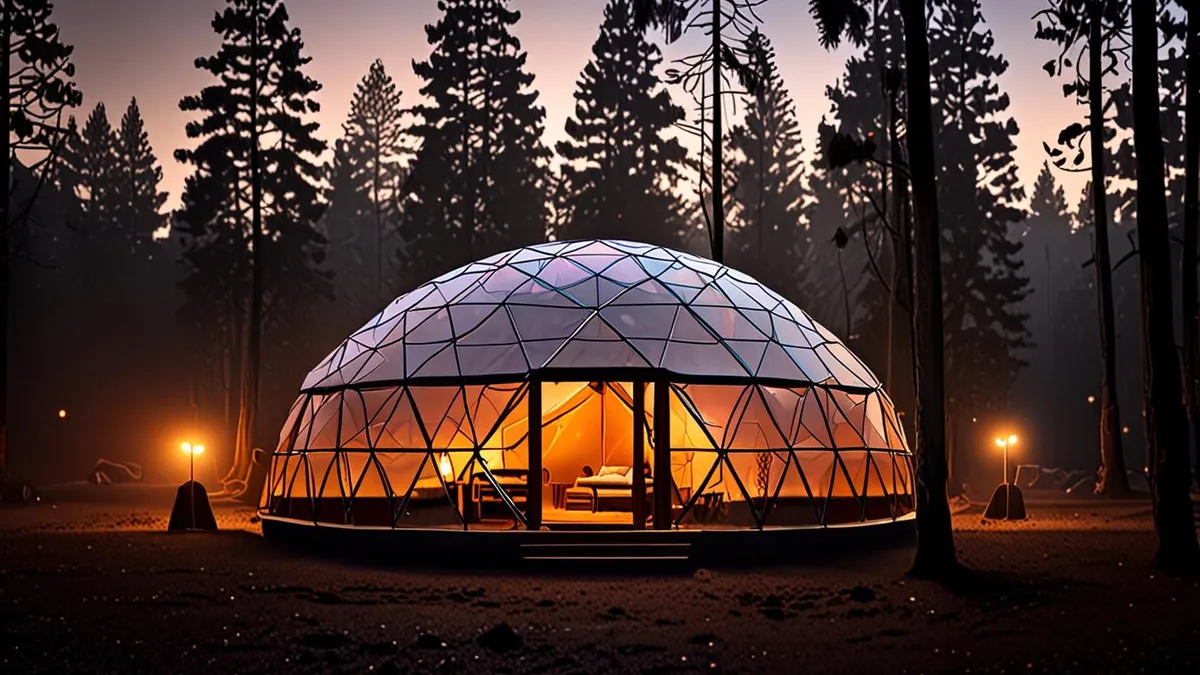
Geodesic domes are the exception to the value rule here. They command a premium for views and novelty, even when the amenities inside match a plain cabin at the same site. You’re paying for the see-through ceiling and the photos, not extra comfort. If that experience matters to you, book it — but if you just want a warm bed and a kitchen, a cabin or Airstream usually delivers the same practical features for less.
This tier also tends to be the best off-peak value in glamping. Because hard-sided units stay bookable in colder months, owners often discount them when demand drops. A cozy cabin in November can cost far less than the same unit in July, and you lose none of the comfort. Check whether the site operates year-round and what the winter access looks like before you book, since some rural locations have limited services in the off-season.
Treehouses and Luxury Lodges: When Glamping Cost Tops $400 a Night
At the top of the glamping market, prices stop resembling camping altogether. Treehouses and high-end lodges sit in their own tier, well above every other glamping style, and some flagship properties climb even higher for the most sought-after units. At this level, you’re no longer paying for a place to sleep in nature — you’re paying for an experience.
What the money actually buys
Expect spa-style bathrooms with soaking tubs and rain showers, chef-prepared meals or private dining options, and curated activities like guided hikes, foraging walks or wine tastings built into the stay. Many properties at this tier include some experiences in the rate, while others charge them separately, so read the inclusions carefully before comparing prices. The treehouse itself is often smaller than a standard hotel room — sometimes dramatically so — with tight staircases and compact layouts.
That’s the key point when evaluating whether it’s worth it: the premium is for setting and exclusivity, not space. You’re paying to wake up in the canopy, to have a private deck over a valley, to stay somewhere only a handful of other guests will sleep in that night.
The honest comparison is against boutique hotels rather than other glamping options. A treehouse at this tier and a boutique hotel room at the same price offer very different things — one gives you architectural charm and a story, the other gives you square footage, a gym and reliable service. If space and amenities per dollar matter most, the hotel usually wins. If the setting is the whole point of the trip, the treehouse can justify every dollar. Just go in knowing which one you’re buying.
How to Lower Your Glamping Cost With Smart Timing and Booking
Glamping prices are not fixed — the same unit can vary dramatically depending on when you book and when you show up. A few timing habits can easily save you a third of the sticker price, and they cost you nothing but a little planning. Unlike flights, where prices swing by algorithm, most glamping sites simply price by demand: weekends, summer and holidays fill first and cost the most. Work around that pattern and the savings add up fast. Here’s how to approach it.
- Book summer weekends 3–6 months ahead. Prime weekend dates in June through August are the first to go, and last-minute availability usually comes with peak pricing. Booking 3–6 months out gives you the widest choice of units and the best chance at standard rates.
- Give shoulder season 4–8 weeks. Outside the summer rush, most sites don’t fill up early. Booking 4–8 weeks ahead is typically enough to secure a good unit, and you’ll often find more flexible cancellation terms too — useful if the forecast turns.
- Travel October–April in mild climates. Off-peak travel can cut rates 30–40% in regions where the weather stays pleasant. Think desert, southern coastal areas and other mild-winter destinations — you get the same tent or cabin for a much lower price.
- Go midweek when you can. Weeknight rates often sit noticeably below weekend rates for the exact same unit. If your schedule allows even one midweek night, that alone can shave real money off the booking, and sites are quieter too.
- Do the math on fees before booking short stays. Cleaning fees and extras like firewood or pet charges often add $50–$150 per booking. On a one-night stay, that can be a huge share of the total — spreading your trip over two or three nights dilutes those fixed costs considerably.
None of these tactics require loyalty programs, discount codes or special connections — just awareness of how glamping sites price their inventory. Check the cancellation policy before you commit, since off-peak and shoulder-season bookings often come with friendlier terms than peak weekends. Combine two or three of these habits, and a stay that looked out of budget suddenly fits comfortably.
The Glamping Cost Picture, Summed Up
So what should a night of glamping actually cost? Anywhere from about $100 to $800+ per night, depending on the stay type. A simple canvas tent sits at the low end, safari tents and yurts fill the middle, and treehouses and luxury lodges can climb well past $400. That is a huge spread for one word, which is exactly why glamping feels confusing when you start comparing listings.
The other big lesson is that no single stay type has a fixed price. Season and location can swing any of them by 20–50%, so the same yurt might be a bargain in April and a splurge in July. In the end, the trick to paying the right price is not hunting the cheapest listing — it is matching the stay type to the comfort level you actually need. If this breakdown helped you budget your next trip, leave a comment or share the article with a fellow traveler.